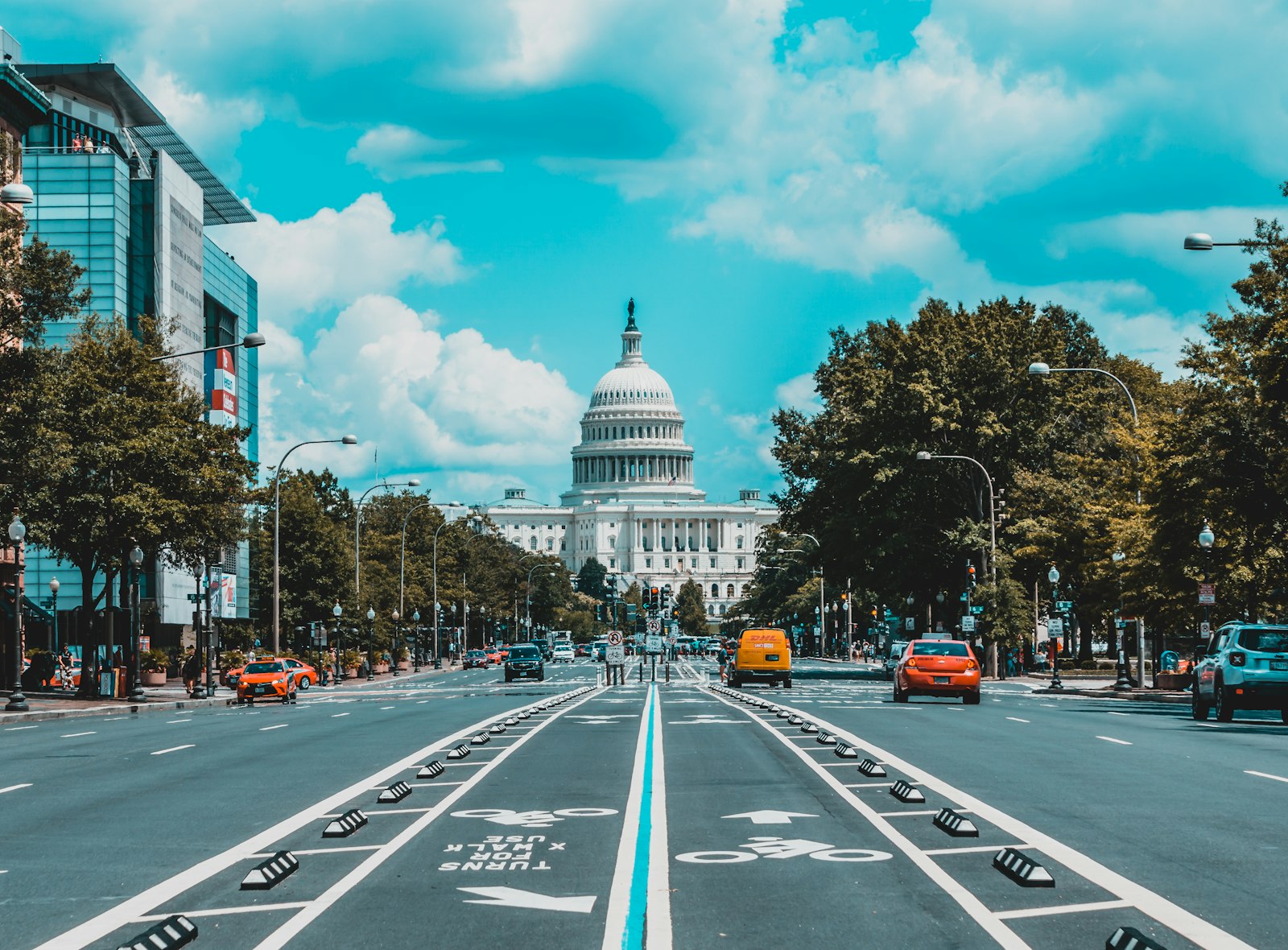
The Lincoln Memorial reflecting in the Reflecting Pool on the National Mall in Washington DC at dawn
History & Culture

Washington, D.C.

The capital of democracy — free world-class museums, iconic monuments, and the living story of America

📍 Mid-Atlantic, USA🗓 Best: March–June, September–November💰 Mid-Range

Washington D.C. is one of the world's great capital cities — a place where ancient marble monuments, free world-class museums, and the living pulse of American democracy all coexist on one legendary mile-long Mall.

The National Mall stretches from the Lincoln Memorial to the United States Capitol — a 1.9-mile open-air corridor flanked by the most visited museums on Earth, all free to enter thanks to the Smithsonian Institution. The National Museum of Natural History, the National Air and Space Museum, the National Gallery of Art, and the National Museum of African American History and Culture are just the beginning.

Beyond the Mall, D.C. reveals itself as a genuinely liveable, diverse, and food-obsessed city. Georgetown's cobblestone streets and Federal-era architecture charm visitors. The 14th Street corridor buzzes with restaurants and bars. The Wharf waterfront has transformed the Southwest waterfront into a destination in its own right. And the Kennedy Center offers world-class performing arts year-round.

Quick Facts

StatusFederal Capital (not a state)
CurrencyUS Dollar (USD)
LanguageEnglish
Time ZoneEST (UTC-5), EDT in summer
Best SeasonsSpring & Fall
AirportsDCA, IAD, BWI
MetroWashington Metro (WMATA)
Smithsonian Museums19 museums — all free

Why Washington, D.C.?

The National Mall — the iconic 1.9-mile corridor from Lincoln Memorial to the Capitol with 19 free Smithsonian museums

The Lincoln Memorial at dawn or dusk — one of the most powerful monuments in the world

The National Museum of African American History and Culture — a profound and essential experience

Cherry Blossom season in late March/early April — the Tidal Basin surrounded by 3,000 cherry trees in bloom

The United States Capitol building tour — walk the halls of American democracy

Georgetown's canal-side streets and the C&O Canal towpath for cycling and dining

The National Gallery of Art East Building — world-class collection from da Vinci to Rothko, all free

The Wharf waterfront district — restaurants, music venues, and water taxis on the Potomac River

Your 5-Day Itinerary

Day 1

The National Mall

  • Arrive and check in to hotel — staying near the Mall or Metro is ideal
  • Morning walk from the Lincoln Memorial along the Reflecting Pool
  • Visit the Vietnam Veterans Memorial and Korean War Veterans Memorial
  • Lunch at the National Museum of Natural History café
  • Afternoon in the National Museum of Natural History
  • Sunset walk to the Washington Monument and Jefferson Memorial
  • Dinner in Penn Quarter or Capitol Hill neighborhood
Day 2

Air & Space, American History & NMAAHC

  • Morning at the National Air and Space Museum — Wright Flyer, Apollo 11, space shuttles
  • Lunch from a food truck on the Mall or at the National Museum of American History
  • Afternoon at the National Museum of African American History and Culture — book timed entry in advance
  • Evening stroll around the Tidal Basin (cherry blossoms in season)
  • Dinner at a restaurant on 14th Street NW or in the 7th Street arts corridor
Day 3

Capitol Hill & Congress

  • Morning tour of the United States Capitol — book free tickets online in advance
  • Visit the Library of Congress — one of the world's great reading rooms
  • Lunch on Eastern Market on Capitol Hill — the best farmers market in D.C.
  • Afternoon at the Folger Shakespeare Library or Supreme Court
  • National Arboretum or U.S. Botanic Garden in late afternoon
  • Dinner in the Barracks Row or H Street Corridor neighborhood
Day 4

Georgetown & The Wharf

  • Morning in Georgetown — brunch at a bakery, stroll along M Street and Wisconsin Avenue
  • Visit Dumbarton Oaks garden and art collection
  • Walk the C&O Canal towpath along the Potomac
  • Afternoon at the Kennedy Center for a free Millennium Stage performance (daily at 6pm)
  • Evening at The Wharf waterfront — dinner with Potomac views and live music
Day 5

National Gallery & Neighborhoods

  • Morning at the National Gallery of Art — East Building for modern art, West Building for old masters
  • Lunch in Chinatown or the Penn Quarter neighborhood
  • Optional: tour the White House visitor center or FBI Building
  • Afternoon in the U Street Corridor — the historic jazz district with great restaurants and shops
  • Farewell dinner at one of D.C.'s James Beard Award-winning restaurants

Insider Travel Tips

🎟

Book NMAAHC Tickets Early

The National Museum of African American History and Culture requires timed-entry passes during busy periods — these sell out weeks in advance. Book on the Smithsonian website as soon as your dates are set. Other Smithsonian museums are walk-in.

🚇

Use the Metro

The Washington Metro is clean, efficient, and covers all major tourist areas. Buy a SmarTrip card for easier travel. Note that service can be limited on weekends. The Mall museums are within walking distance of Blue/Orange/Silver and Green/Yellow line stations.

🌸

Cherry Blossom Timing

The National Cherry Blossom Festival (late March to mid-April) is D.C.'s most spectacular annual event — but also the most crowded. Check the National Park Service's peak bloom predictions, usually updated in late February. Arrive at the Tidal Basin before 7am for the best photos and no crowds.

💡

Free Is Best

Almost all the major attractions in Washington D.C. are completely free — the Capitol tour, all 19 Smithsonian museums, the monuments, the National Zoo, and the National Gallery of Art. Budget travelers can have a world-class experience spending almost nothing on attractions.

When to Visit

Washington D.C. has four distinct seasons. Spring (March–May) is the most celebrated — mild temperatures, blooming cherry trees, and the most vibrant city atmosphere. Summer (June–August) is hot and humid, with temperatures often reaching 35°C+ and air quality alerts. Fall (September–November) is cool and beautiful. Winter (December–February) is mild by northern standards with occasional snow.

Mar–May (Spring)

Best season. Cherry blossoms in late March/early April are iconic. Mild temperatures (12–22°C). Outdoor events and festivals begin. Book accommodation early for cherry blossom peak.

Jun–Aug (Summer)

Hot and humid — often above 32°C with high humidity. Many outdoor concerts and events. The Mall is busy with tourists. Start museum visits early to beat heat and crowds. July 4th fireworks over the Mall are spectacular.

Sep–Nov (Fall)

Excellent shoulder season. Comfortable temperatures (12–24°C), fall foliage color. Crowds thin compared to summer. The September jazz and arts festivals make this a great cultural season.

Dec–Feb (Winter)

Quiet and sometimes snowy — snowstorms can shut the city down briefly. But winter is beautiful at the monuments after a snowfall. Holiday decorations throughout Georgetown and Embassy Row. Cold but manageable (0–8°C average).

Ready to Plan Your Washington, D.C. Journey?

Let our travel experts craft your perfect itinerary.

Find & Price My TripGet a Budget Estimate