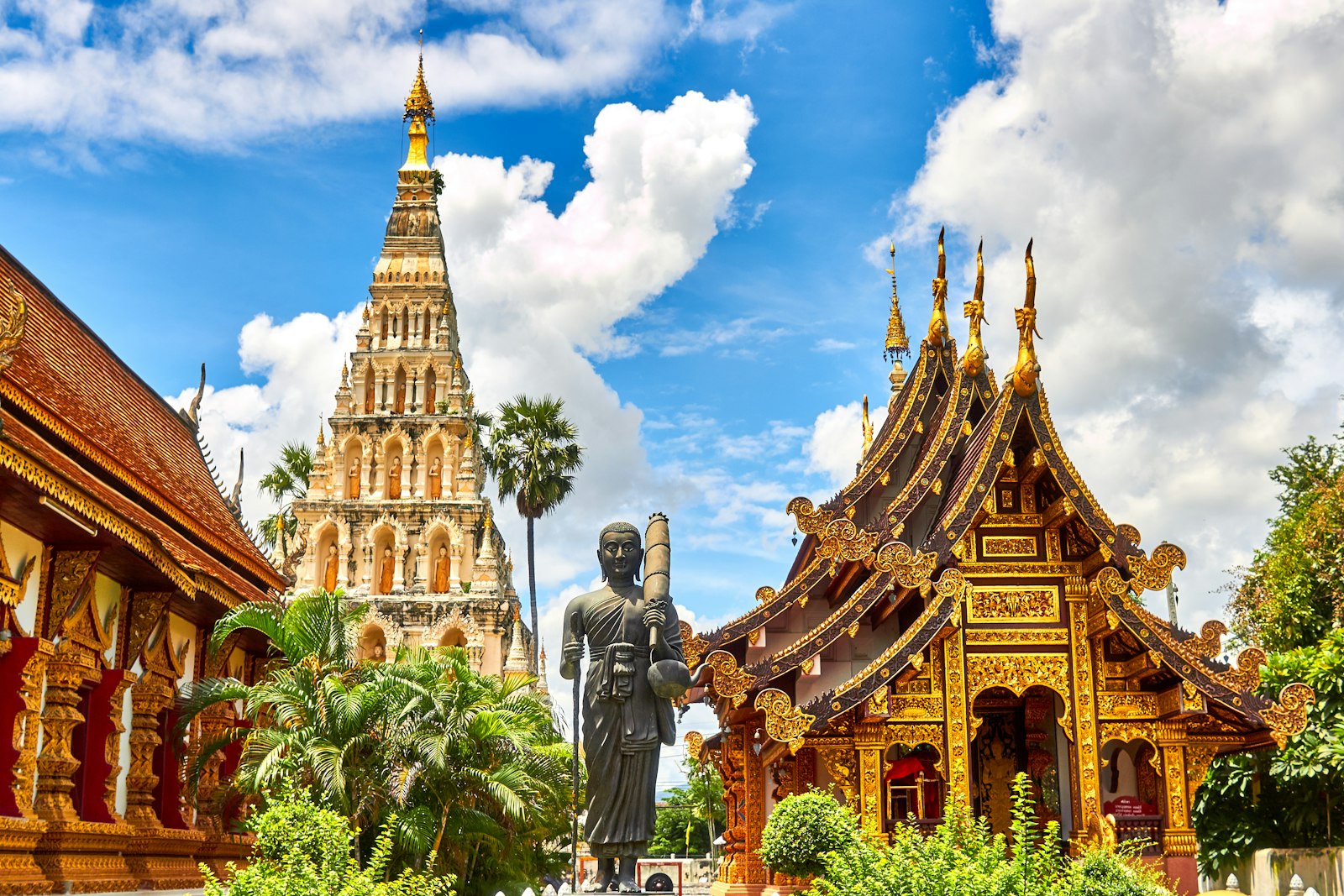
Land of Smiles — golden temples, turquoise islands, vibrant street food, and ancient royal heritage
Thailand is Southeast Asia's most visited country for excellent reasons — an intoxicating blend of spiritual depth, culinary brilliance, natural beauty, and legendary hospitality.
Bangkok assaults the senses in the best possible way — ancient golden temples rise beside ultramodern skyscrapers, tuk-tuks weave through streets filled with the aroma of pad thai and mango sticky rice, and the nightlife ranges from rooftop cocktail bars to the legendary Khao San Road. It's one of the world's great urban adventures.
Venture north to Chiang Mai for ancient Lanna temples, elephant sanctuaries, cooking classes, and trekking in the hill tribe villages. Then head south for the islands — from the party energy of Koh Samui and the diving paradise of Koh Tao to the pristine shores of the Andaman Sea at Krabi and the Phi Phi Islands. Thailand delivers it all.
Bangkok's Grand Palace and Wat Phra Kaew — the breathtaking temple complex housing the Emerald Buddha
Explore Wat Arun (Temple of Dawn) by the Chao Phraya River at sunrise or sunset
Ancient moated city of Chiang Mai with over 300 temples and vibrant Night Bazaar
Ethical elephant sanctuary experiences in the Chiang Mai hills — observe, not ride
Spectacular limestone karst scenery at Railay Beach and Krabi — only accessible by boat
Snorkeling and diving in the crystal-clear waters around Koh Tao — one of the world's best diving spots
Floating markets — Damnoen Saduak or Amphawa — for a traditional Thai canal market experience
Thai cooking classes to master pad thai, tom kha gai, and mango sticky rice
Dress modestly for all temple visits — shoulders and knees must be covered for both men and women. Remove shoes before entering temple buildings. Never point feet at Buddha images or monks, and always greet with a wai (hands pressed together).
Thailand's best food is on the street — look for stalls with long queues of locals. Night markets are excellent for variety. Avoid overly touristy restaurants near major temples; venture one street back for authentic, affordable meals.
Use the BTS Skytrain and MRT metro to avoid Bangkok's notorious traffic. Grab app (like Uber) is reliable for taxis. Tuk-tuks are fun but negotiate the price beforehand and avoid being taken to gem or tailor shops.
Thailand's two coastlines have opposite monsoon seasons. The Gulf Coast (Koh Samui, Koh Tao) is best October–April. The Andaman Coast (Phuket, Krabi, Koh Lanta) is best November–April. Check weather before booking island destinations.
Thailand has three seasons — hot (March–May), rainy (June–October), and cool/dry (November–February). The cool dry season from November to February is the best time to visit — comfortable temperatures around 25–30°C, low humidity, and minimal rain. Bangkok and Chiang Mai are best November–March. Island weather varies by coast.
Best time to visit most of Thailand. Comfortable temperatures, low humidity, blue skies. Peak season with more tourists and higher prices — book accommodation early.
Extremely hot — Bangkok can reach 38°C+. Still dry. Good for islands before the monsoon arrives. Songkran (Thai New Year water festival) in mid-April is spectacular but accommodation fills up.
Heavy afternoon rains across most of the country. Lush green landscapes. Fewer crowds. Gulf Coast islands (Koh Samui) are more sheltered and can be visited June–September. Budget travelers enjoy lower prices.
Tail end of the monsoon. The north (Chiang Mai) dries out first. Islands can be hit or miss. The famous Loi Krathong lantern festival in November is a magical cultural highlight.
Let our travel experts craft your perfect itinerary.