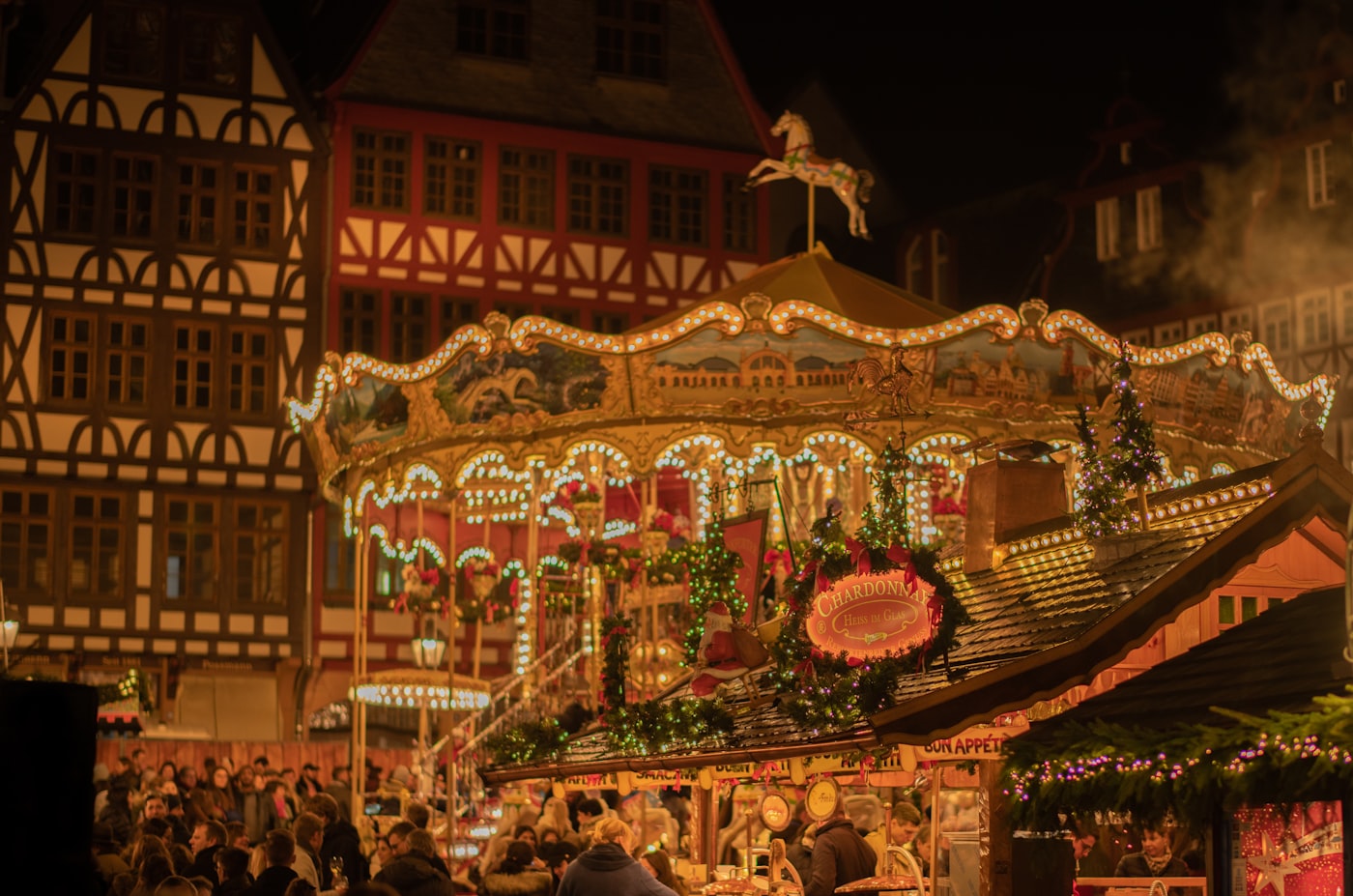
Few travel experiences rival the magic of a European Christmas market. The glow of twinkling lights reflected on cobblestone streets, the scent of mulled wine and roasted chestnuts drifting through the cold air, the sound of carols echoing off centuries-old cathedral walls — it is, quite simply, one of the most enchanting things you can do as a traveler.
After years of personally escorting clients through the best markets in Europe, I want to share everything I know about planning the perfect Christmas market trip. This is the guide I wish I'd had on my first visit.
First: Which Markets Should You Visit?
Europe has hundreds of Christmas markets, and they are not all created equal. The classic destinations — Nuremberg, Strasbourg, Vienna, Prague, Cologne — are classics for a reason: they are spectacular, deeply rooted in tradition, and offer experiences you simply cannot replicate. But they are also crowded, especially on weekends in December.
Here is my personal hierarchy, organized by travel style:
For History & Grandeur: Vienna & Prague
Vienna's Christkindlmarkt at the Rathaus and Prague's Old Town Square market are set against some of the most beautiful architectural backdrops in the world. If you care about the visual drama of your surroundings, these two cities deliver at the highest level. Combine them in a single trip — they are just four hours apart by train.
For Tradition & Authenticity: Nuremberg & Salzburg
The Nuremberg Christkindlesmarkt is one of the oldest and most traditional markets in Germany, with a documented history reaching back to the 17th century. It feels like stepping into a woodcut illustration. Salzburg pairs market magic with Mozart, mountain scenery, and some of the most beautiful baroque architecture in the German-speaking world.
For Charm & French Flair: Strasbourg & Colmar
Strasbourg's Christkindelsmärik is the oldest in France, set in the enchanting timber-framed Alsatian old town. Pair it with a day trip to nearby Colmar — possibly the most picturesque town in all of Europe — and you have an unforgettable short trip.
For River Cruise Lovers: The Rhine Valley
A Rhine River Christmas cruise glides between market towns — Cologne, Rüdesheim, Koblenz — letting you experience multiple markets without repacking your bags each night. This is my top recommendation for first-timers who want to see several markets efficiently.
For Something a Little Different: Budapest & Brussels
Budapest brings a distinctly Hungarian flavor, with markets on Vörösmarty Square and in front of St. Stephen’s Basilica, where the basilica façade is lit up with projections in the evenings. Brussels spreads its Winter Wonders celebration from the Grand-Place — one of the most beautiful squares in Europe — through the surrounding streets, and it pairs naturally with Bruges or a stop in Cologne, which is roughly two hours away by high-speed train.
River Cruise or Land Trip? An Honest Comparison
This is the first question we ask every Christmas market client, because it shapes everything else. Both are wonderful; they simply suit different travelers.
The Danube: Imperial Cities and Bavarian Charm
Danube Christmas sailings typically connect some combination of Nuremberg (reached via the Main-Danube Canal), Regensburg, Passau, Vienna, Bratislava, and Budapest. It is the route for travelers who love grand capitals, coffeehouse culture, and classical music, with smaller medieval towns like Regensburg and Passau in between that feel wonderfully intimate after the big-city markets.
The Rhine: Cathedrals, Castles, and Alsace
Rhine itineraries usually run between Basel and Amsterdam, with stops that commonly include Strasbourg, Rüdesheim, Koblenz, and Cologne. Expect hilltop castles along the Middle Rhine, the half-timbered lanes of Rüdesheim, and Cologne’s market sprawled beneath its towering Gothic cathedral.
Why Travelers Love a River Cruise
- Unpack once: You wake up in a new market town most mornings without hauling luggage onto trains.
- A warm home base: Meals, guided walks, and a cozy lounge to return to after an evening in the cold are built in.
- Easy for first-timers: The logistics are handled, which is a real gift when daylight is short and the weather is unpredictable.
Why Others Prefer a Land Trip
- More evenings at the markets: Markets are at their most magical after dark, and on a land trip every evening is yours. Cruise schedules sometimes mean sailing at night or docking a short ride from the old town.
- Deeper stays: Three or four nights in Vienna or Prague leaves room for concerts, museums, and long lunches.
- Flexibility: You choose the cities, the hotels, and the pace. River cruises can also occasionally be affected by high or low water levels, which may change an itinerary.
Many of our clients split the difference: a seven-night river cruise followed by two or three nights in Vienna, Budapest, or Basel on land.
When Is the Best Time to Go?
Most major markets open in late November, typically around the end of the month or the first Advent weekend, though a few (Vienna and Cologne among them) often open earlier in the month. Most close around December 23–24, while some, such as Prague and Budapest, usually continue past Christmas and into the New Year or early January. Exact dates change every year, so always confirm each city’s official market dates before booking. Here is the honest breakdown:
- Late November to early December: Best crowds, best hotel prices, full market atmosphere. My top recommendation for savvy travelers.
- Mid-December (8th–20th): Peak atmosphere and potential for snow, but significantly more crowded and expensive. Book everything months in advance.
- Final week before Christmas: Many markets, including Nuremberg, close on December 23rd or 24th, so check dates carefully if you plan to travel this late. Extremely crowded but magical if you can handle it.
Weekdays, Weekends, and the Magic Hour
Weekends — especially Saturdays in December — bring day-trippers and tour coaches, and the most famous markets can become shoulder-to-shoulder by evening. Weekday mornings and early afternoons are the calmest time for browsing and gift shopping. But do not skip the evenings: in Central Europe the sun sets around 4:00–4:30 p.m. in December, and the moment the lights come on is when the markets truly come alive. Our favorite rhythm is to shop in daylight, warm up in a café in the late afternoon, and return after dark for Glühwein, music, and the glow.
What to Eat and Drink at the Markets
Half the joy of a Christmas market is grazing your way from stall to stall. These are the traditions worth seeking out:
- Glühwein: Hot mulled wine, red or white, spiced with cinnamon, clove, and citrus. In Austria you will also find Punsch, and in Alsace it becomes vin chaud. Ask for a Kinderpunsch if you want a non-alcoholic version.
- The mug and the Pfand: Drinks are served in ceramic mugs with a small refundable deposit (Pfand). Return the mug to any stall from that market for your deposit back, or keep it as a souvenir.
- Feuerzangenbowle: A theatrical German specialty in which a rum-soaked sugarloaf is set alight over a pot of mulled wine, caramelizing into the drink below.
- Lebkuchen: Spiced gingerbread, with Nuremberg its most famous home. Look for the soft, nut-rich Elisenlebkuchen.
- Stollen: The dense, fruit-studded Christmas bread dusted with powdered sugar, most closely associated with Dresden.
- Bratwurst: In Nuremberg, order the small Nuremberg sausages “drei im Weggla” — three in a roll.
- Roasted chestnuts: Sold hot in paper cones throughout Germany and Austria (Maroni in Vienna), and wonderful for warming your hands.
- Chimney cake: Dough wrapped around a spit, roasted over coals, and rolled in sugar — called Baumstriezel in Germany and kürtőskalács in Hungary, and a must in Budapest.
How Long Should You Stay?
My recommendation varies by destination, but here is a general guide:
- Single city focus (Vienna, Prague, Strasbourg): 3–4 nights lets you enjoy the markets at different times of day, explore the city properly, and attend at least one Advent concert.
- Multi-city itinerary: 7–10 nights is ideal for visiting 3 markets. The Nuremberg + Prague + Vienna triangle is superb. Strasbourg + Colmar + Basel makes a wonderful 4-night short break.
- Rhine River Cruise: 7–8 day cruises between Amsterdam and Basel are the gold standard, hitting 6–8 market towns along the way.
A Sample 9-Day Christmas Market Itinerary
Here is a classic land itinerary we love for first-time visitors, linking three capitals of Christmas by train:
- Day 1: Overnight flight from the U.S. to Prague.
- Day 2: Arrive in Prague. Settle in, then an easy evening stroll to the Old Town Square market and its towering tree.
- Day 3: Prague Castle and Charles Bridge by daylight; Wenceslas Square market in the evening.
- Day 4: Train to Vienna (about four hours). Evening at the Rathausplatz market.
- Day 5: Vienna’s smaller, quieter markets at Schloss Schönbrunn, Spittelberg, and Am Hof, followed by an Advent concert.
- Day 6: Free day for the Hofburg, a coffeehouse afternoon, or an optional day trip to Bratislava, about an hour away.
- Day 7: Train to Salzburg (roughly two and a half hours). Evening at the Christkindlmarkt on Domplatz and Residenzplatz.
- Day 8: Old Town, Hohensalzburg Fortress, and a farewell dinner.
- Day 9: Transfer to Munich (about two hours) or back to Vienna for your flight home.
Prefer the Rhine? Swap in Strasbourg, Colmar, and Cologne. Want to add a tenth day? Budapest is about two and a half hours from Vienna by train.
Essential Packing Tips
European Christmas markets mean outdoor walking in cold, sometimes wet conditions. Pack accordingly:
- Thermal base layers (merino wool is best)
- Waterproof boots with warm lining — your feet will thank you
- A good quality coat, hat, and gloves
- Small crossbody bag or money belt for the crowds
- Reusable tote bag for gifts and market purchases
- A power adapter (Type C/F for continental Europe)
Dressing for the Cold
December in Central Europe is typically cold and damp, often hovering around freezing, and you will be standing outdoors on stone squares for hours at a time. Layering is everything: a thermal base layer, a warm mid-layer such as a fleece or wool sweater, and a windproof, water-resistant coat you can open up when you duck into a warm shop or museum. A warm hat, a scarf, and gloves that let you hold a hot mug are essential. Wool socks and insulated, waterproof shoes with good tread matter more than anything else — cobblestones can be slick, and cold feet will end a beautiful evening early. Many travelers also tuck disposable hand warmers into their pockets.
How to Budget for a Christmas Market Trip
Christmas market trips can range from surprisingly affordable to splurge-worthy, depending on your choices. Here is what to expect:
Accommodation: Central city hotels in December can be expensive — budget $200–$400/night for a good 4-star property in Vienna or Prague in early December. Book 3–4 months in advance for the best rates.
At the markets: Most market attractions are free to browse. Budget $30–$60/person/day for food, drinks (mulled wine mugs are typically $5–$8 plus a refundable deposit), and small purchases.
Concerts & events: Advent concerts in Vienna's magnificent halls start around $50 and go up to $200+ for the Musikverein. Book these before you depart — they sell out.
Money Tips for the Markets
- Carry some cash: Card and contactless payments are increasingly accepted, but cash is still common at market stalls, particularly in Germany, and small bills and coins make Glühwein and snack purchases quick.
- Know the currency: Germany, Austria, France, Belgium, and Slovakia use the euro, but Prague uses the Czech koruna, Budapest the Hungarian forint, and Basel the Swiss franc.
- Pay in local currency: When a card terminal or ATM offers to charge you in U.S. dollars, decline and choose the local currency to avoid unfavorable conversion rates.
- Use bank ATMs: Withdraw from ATMs attached to a bank rather than standalone machines in tourist areas, which often carry higher fees.
- Bring a no-foreign-transaction-fee card and let your bank know your travel dates before you go.
When to Book: A Realistic Timeline
The single most common mistake we see is waiting too long. December is high season for Europe’s market cities, and the best options disappear early.
- Holiday river cruises: Christmas market sailings are among the most popular river cruises of the year, and the best dates and cabins often sell out many months ahead. Many travelers book a year or more in advance. For more on cruise timing, see our Wave Season 2027 cruise booking guide.
- Central hotels: Well-located hotels within walking distance of the markets fill early, especially for Friday and Saturday nights in December. Book as soon as your dates are set.
- Concerts and special events: Advent concerts, opera, and holiday dinners should be booked as soon as tickets are released.
- Flights and passports: Watch fares early, and check that your passport meets the Schengen Area requirements (generally valid at least three months beyond your departure date and issued within the past ten years).
If you are hoping to go in late 2026 and have not booked yet, it is not too late, but flexibility helps: weekday arrivals, slightly smaller cities, or a land itinerary instead of a cruise can still open up wonderful options. If 2027 is your year, now is the perfect time to start.
Working with a Travel Advisor
Christmas market trips look simple on the surface — but the logistics of booking the right hotels (close enough to walk to markets, but not so central that noise is an issue), securing concert and opera tickets months out, coordinating transportation between cities, and knowing which market nights to prioritize can make the difference between a good trip and an extraordinary one.
This is exactly where working with a specialized travel advisor pays dividends. Elizabeth and I have visited dozens of European Christmas markets over the years, and we know the small details that matter — the best café to warm up in after the Cologne market, which stall in Strasbourg makes the best bredele cookies, which nights the Salzburg cathedral hosts its most moving Advent concerts.
If a European Christmas market trip is on your wish list for this season or next, we would love to help you plan it. Whether you are dreaming of a Danube cruise, a Rhine sailing, or a train journey through Prague, Vienna, and Salzburg, book a complimentary consultation with us or call (919) 348-6268, and we will design every detail around you. There is truly nothing like it.
Ready to Plan Your Christmas Market Adventure?
Jay & Elizabeth Nichols specialize in European Christmas market itineraries — let us create something magical for you.
Start Planning