Japan in Cherry Blossom Season: A Once-in-a-Lifetime Journey
Japan during cherry blossom season is one of those rare travel experiences that actually exceeds expectations. The colors, the culture, the food, the precision — it all converges into something that feels almost unreal. Elizabeth Nichols breaks down how to plan this extraordinary journey the right way.
The Season
Understanding Sakura Season
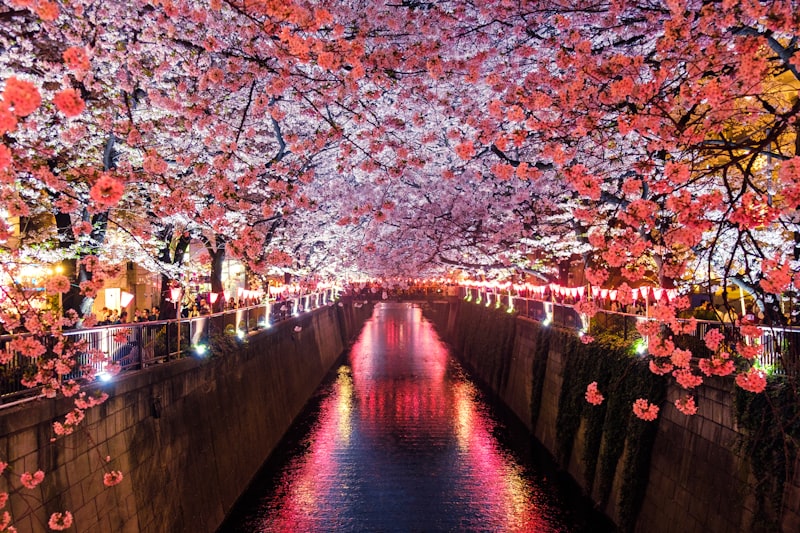
Cherry blossom season — sakura — is one of the most anticipated natural events in the world, and Japan greets it with something close to reverence. The blooms are beautiful precisely because they are fleeting: an individual tree is usually at its best for only about a week, and a spell of wind or rain can bring the petals down sooner. In Japanese culture the blossoms have long stood for the beauty of impermanence, and the custom of hanami (literally “flower viewing”) turns those few days into a nationwide celebration of picnics, evening strolls and illuminated gardens.
The bloom travels across the country like a slow wave, generally moving from south to north (and from low ground to high) as temperatures warm. The exact dates shift by a week or more from year to year depending on how cold the winter was and how quickly spring arrives, which is why no one can promise you peak bloom on a specific date months in advance. A thoughtfully planned itinerary, however, can work with the bloom rather than against it — and even follow it north to stretch your sakura window well beyond a single week.
- Okinawa — late January through February (the deep-pink kanhizakura variety)
- Kyushu (Fukuoka, Nagasaki) — late March to early April
- Tokyo, Kyoto, Osaka, Nara and Hiroshima — late March to early April
- Mountain areas such as Kawaguchiko and Mount Yoshino — often a week or two later than the nearby lowland cities
- Tohoku (Sendai, Kakunodate, Hirosaki) — mid to late April
- Hokkaido (Sapporo, Hakodate) — late April to early May
Reading the Forecast
How Cherry Blossom Forecasts Work
Japan takes its bloom forecasts seriously. Private weather companies — most notably the Japan Meteorological Corporation and Weathernews — typically publish their first sakura forecasts for the coming spring in January, then update them regularly (often weekly) through February and March as real temperature data comes in.
Two terms are worth knowing. Kaika is the official “first bloom,” declared when a handful of flowers open on a designated benchmark tree in each city (Tokyo’s famous sample tree stands at Yasukuni Shrine). Mankai is “full bloom,” declared when roughly 80 percent of the benchmark tree’s buds are open. Full bloom usually arrives about a week after first bloom, and the days around mankai are the ones most travelers dream about.
For a spring 2027 trip, we recommend planning around the historical averages now — booking flights and hotels to cover the most likely window — and then watching the January forecasts to fine-tune day trips and the order in which you visit each city. Building a little flexibility into the middle of the itinerary is far more valuable than trying to pin peak bloom to a single date a year out.
- Arrived early? Look for early-blooming varieties and warmer southern spots.
- Arrived late? Head uphill or north, where the bloom is still to come.
- Look for yaezakura — fluffy, double-petaled varieties that typically bloom a week or two after the classic Somei Yoshino.
The Itinerary
A Sample 10 to 12 Day Sakura Itinerary
For a first visit, we recommend a classic route that pairs Japan’s great cities with one mountain or countryside stay. It works beautifully in late March and early April, when Tokyo and Kyoto tend to bloom within days of each other,.
- Days 1–3: Tokyo. Arrive, adjust to the time change, and ease in with the city’s best sakura parks, a morning at a historic shrine and a first taste of Japan’s extraordinary food scene.
- Days 4–5: Hakone or Lake Kawaguchiko. Trade city lights for mountain air and, on a clear day, views of Mount Fuji. Hakone is known for its hot-spring ryokan and lake scenery; Kawaguchiko offers the iconic view of Fuji framed by the Chureito Pagoda, where the blossoms often peak a little later than in central Tokyo.
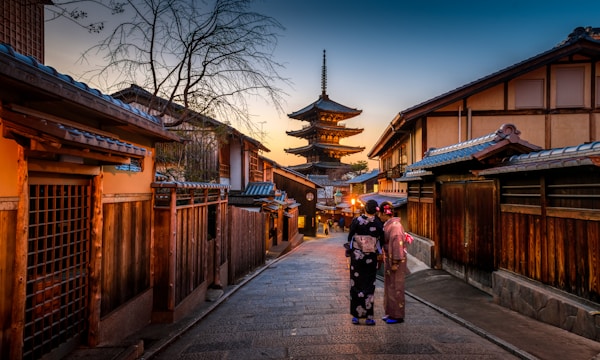
- Days 6–9: Kyoto. Give Kyoto at least three or four nights. Its temples, gardens and lantern-lit lanes are at their most romantic in bloom, and early mornings are the secret to enjoying the famous spots before the crowds.
- Day 8 (from Kyoto): Nara. An easy day trip to Todai-ji’s Great Buddha and the deer of Nara Park, where cherry trees frame the ancient temple grounds.
- Days 10–11: Osaka. Finish with Japan’s liveliest food city — the castle park is a major hanami spot — and an easy departure from Kansai International Airport.
- Optional extension: add a night or two in Kanazawa (Kenroku-en garden and its castle park) via the Hokuriku Shinkansen, or Hiroshima and the island of Miyajima, home to the “floating” torii gate of Itsukushima Shrine.
Where to See Them
Japan’s Most Celebrated Cherry Blossom Spots
Japan has thousands of beautiful sakura spots, but a handful are legendary for good reason. In Tokyo, Shinjuku Gyoen National Garden is our favorite for a calmer hanami: it charges a modest entry fee, bans alcohol, and its roughly one thousand trees of many different varieties bloom at slightly different times, which extends the season. The Meguro River is lined with cherry trees whose branches arch over the water, and it is especially atmospheric when lit up in the evening. At Chidorigafuchi, beside the Imperial Palace moat, you can rent a rowboat and glide beneath the blossoms, while Ueno Park is Tokyo’s most festive (and most crowded) hanami party.
In Kyoto, the Philosopher’s Path follows a quiet canal lined with cherry trees between Ginkaku-ji and the Nanzen-ji area — go early in the morning. Maruyama Park, beside Yasaka Shrine, is home to a famous weeping cherry that is illuminated at night. Arashiyama pairs blossoms with the river, Togetsukyo Bridge and forested hills, and Daigo-ji in the southeast of the city is celebrated for its cherry trees and its history: the warlord Toyotomi Hideyoshi hosted a legendary blossom-viewing party there in 1598.
Beyond the big cities, a few places are worth building a day around. Himeji Castle, a UNESCO World Heritage Site and Japan’s finest surviving original castle, is a short Shinkansen ride from Osaka or Kyoto and is surrounded by cherry trees. Mount Yoshino in Nara Prefecture has been famous for sakura for centuries; its tens of thousands of trees bloom in stages from the lower slopes to the upper ones, which often lengthens the viewing window. And in the north, Hirosaki Castle in Aomori Prefecture is widely considered one of the finest cherry blossom sites in Japan, with thousands of trees, moats covered in drifting petals and a popular spring festival, usually in late April.
- Tokyo — Shinjuku Gyoen, Meguro River, Chidorigafuchi, Ueno Park
- Kyoto — Philosopher’s Path, Maruyama Park, Arashiyama, Daigo-ji
- Himeji — Himeji Castle and its grounds
- Nara Prefecture — Mount Yoshino
- Aomori Prefecture — Hirosaki Castle Park
Etiquette
How to Enjoy Hanami Like a Local
Hanami is a joyful, social tradition, and visitors are warmly welcome to join in. A little etiquette goes a long way and keeps the experience lovely for everyone.
- Never pick blossoms, shake branches or climb the trees — and avoid standing on the roots.
- Take your trash with you. Public bins are scarce in Japan, so carry a small bag for your rubbish.
- If you join a picnic on a blue tarp, take your shoes off before stepping on it.
- Check each park’s rules: some prohibit alcohol, amplified music or cooking, and many have closing times.
- Keep voices and speakers low, especially in temple grounds and residential areas.
- Step aside after your photo, and don’t block narrow paths or bridges.
Planning Advice
When to Book for Spring 2027
Cherry blossom season is Japan’s busiest travel window, and the best hotels in Tokyo and Kyoto fill early. We recommend reserving hotels and ryokan six to nine months ahead at a minimum — and earlier still for small, sought-after ryokan, which may have only a handful of rooms. For a late-March or early-April 2027 trip, that means now is the right time to start.
Dining takes a different kind of planning. Many of Japan’s most celebrated restaurants open reservations only a month or two in advance, and some accept bookings only through a hotel concierge or Japanese-language channels, so it pays to know each restaurant’s booking window and be ready the day it opens.
Also keep Golden Week in mind. This cluster of national holidays runs from late April into early May (in 2027, from Thursday, April 29 through Wednesday, May 5), and it is one of the busiest domestic travel periods of the year. Trains, hotels and popular sights get very crowded and prices rise.
- 9–12 months out: choose your route and reserve hotels and ryokan
- 6–9 months out: book international flights and any private guides
- January–March 2027: follow the bloom forecasts and fine-tune day trips
- 1–2 months out: secure restaurant reservations as booking windows open
- About a month out: reserve Shinkansen seats once sales open
Getting Around
Rail Tips: Shinkansen, Passes & Luggage
Japan’s rail network is a joy: punctual, spotless and fast. The Tokaido Shinkansen connects Tokyo and Kyoto in a little over two hours on the fastest Nozomi trains, with Osaka just beyond.
The Japan Rail Pass is no longer the automatic choice it once was. In October 2023 its price rose significantly — the standard 7-day pass went from ¥29,650 to ¥50,000 — so for a classic Tokyo–Kyoto–Osaka route, individual point-to-point tickets are now often the better value. A pass can still make sense for itineraries with several long journeys, so we recommend pricing out your actual route both ways before deciding.
- Reserve Shinkansen seats in advance during sakura season; unreserved cars fill quickly on busy days.
- Large suitcases on the Tokaido, Sanyo and Kyushu Shinkansen require a seat reservation that includes an oversized-baggage space.
- Better still, use Japan’s excellent luggage forwarding service (takkyubin) to send big bags ahead to your next hotel and travel light.
- Load a rechargeable IC card such as Suica or PASMO (available as a mobile wallet card on many phones) for local trains, subways and convenience stores.
- Ask for a seat on the right side of the train (seat E in ordinary cars) heading west from Tokyo for a chance at Mount Fuji views on a clear day.
What to Pack
Dressing for Spring in Japan
Spring weather in Japan is mild but changeable. In Tokyo and Kyoto, late-March and early-April days are often pleasantly cool, while evenings — exactly when the illuminated night blossoms are at their best — can feel chilly. The Japanese even have a word, hanabie, for the cold snap that so often arrives during blossom season. Mountain areas and northern Japan are noticeably colder.
- Layers: a light sweater or fleece plus a packable jacket for evenings
- A compact umbrella or light rain shell
- Comfortable walking shoes that slip on and off easily — you will remove them at temples, ryokan and some restaurants
- Presentable socks without holes, for the same reason
- A small bag for carrying your trash, plus a handkerchief or small towel (many restrooms have no paper towels)
The Luxury Touch
Elevating Your Sakura Journey
Japan’s hospitality tradition, omotenashi, makes it one of the world’s great luxury destinations. For a truly special spring trip, we recommend at least one night in a fine ryokan, ideally with a private open-air bath (rotenburo) attached to your room, so you can soak in the hot spring on your own schedule. Many top ryokan include an elaborate multi-course kaiseki dinner served in your room or a private dining space, showcasing seasonal ingredients — and in spring, the presentation often nods to the blossoms themselves.
We also recommend a private guide for at least a day or two in Tokyo and Kyoto. A knowledgeable licensed guide can time your visits to avoid the worst crowds, explain the history behind what you are seeing, help with dining and language, and adjust the plan on the spot if the blossoms are further along in one neighborhood than another.
- Designing a route around the likeliest bloom window, with flexibility built in
- Reserving hotels and ryokan early, before the best rooms are gone
- Advising on rail passes versus point-to-point tickets for your specific route
- Arranging private guides, transfers and luggage forwarding
- Monitoring the bloom forecasts and fine-tuning plans as your trip approaches
Dreaming of Japan in bloom next spring? We would love to help you plan it, from the first sketch of your route to the last cup of matcha. Book a consultation with Jay and Elizabeth and let’s start shaping your 2027 sakura journey while the best rooms are still available.
Ready to Experience Japan in Bloom?
Sakura season books out fast — often a full year ahead. Let Elizabeth start planning your Japan journey now so you don't miss a single petal.
Plan My Japan Trip